
HỘI THIỀN TÁNH KHÔNG TRUNG ƯƠNG

ENG064 Bhikkhuni Triệt Như - Sharing from the Heart 97 THE PATH OF THE AWAKENED PERSON

Tuesday, April 19, 20225:00 PM(View: 5425)
ENG064 Bhikkhuni Triệt Như 
Sharing from the Heart 97
THE PATH OF THE AWAKENED PERSON
Translated into English by NHƯ LƯU
Narrated by PHƯƠNG QUẾ
click_to_watch
https://youtu.be/DQXWTNxDD1Y
ENG063 THE PATH OF THE AWAKENED PERSON
______________________________________________________________________________

Triệt Như - Sharing From The Heart - No 97

Translated to English by Như Lưu

THE PATH OF THE AWAKENED PERSON


This “path” is a narrow way that few people want to tread for it is not famous and has not been extolled in books or lectures attended by thousands of people. However it was trod upon by many people in the past for it accords with the teaching of the sutras. “The awakened person” refers to a person who sincerely seeks the peaceful life by developing their innate wisdom and compassion, then shares with others their own experience. In this article, I will use the term “awakened person” with its general meaning and not as a reference to the Buddha, whose name also means “the awakened one”.

blank


I dedicate this article for all those who have awakened to the knowledge that they have the potential for enlightenment which is the innate ability to transform oneself into a completely pure, wholesome and wise being. How do we know that? Developmental Buddhism masters have said: “The primordial essence of the mind is pure and silent”. Why is a pure mind also a silent mind?

The mind of the ordinary person is often attached to events that originate in the external world or inside the body. When they see a glorious sunrise, they want to enjoy it and take a photo; when they see the rays of a setting sun reddening the blue sky and white clouds, they got inspired to write a poem; when the rain falls in autumn, they remember the past and feel longing and regret. When they see their image in the mirror in the morning, they notice grey hair and feel sad; when they feel unsteady on their feet or even fall, they know that they are getting old. When others show them high regards, they feel pleasure; when others show them neglect, they feel sorrow. When they see others pass away, they feel sad as they know that they will also depart one day, alone, without any anyone at their side.

blank

From these reflections, we gradually develop the understanding that we can only achieve true peace and serenity if we stop letting events blow us away. We realize that only a mind that is silent and un-disturbed by the world can be pure, free from longing, regret, joy, and sorrow. We decide to seek refuge in the Buddha. This is a sign that our intellect has awakened. This awakening will need to be sustained by a resolve to follow the path, without delay, hesitation, or turning back even in the face on unfavorable conditions. This resolve is equally required if we wish to achieve our goals in the worldly life or the spiritual life. In many ways, we may experience more obstacles and challenges on the spiritual path. The resolve to leave behind the worldly life – which the Buddha viewed as covered by the dust of the world – is represented by the act of “leaving home and severing desires”. In the “Longer Discourse with Saccaka” (Majjhima Nikāya, MN36), the Buddha said:

Here, Aggivessana, before my enlightenment, before I attained the Right Full Enlightenment, while I was still only an unenlightened Bodhisatta, I thought: “Household life is crowded and dusty; life gone forth is wide open. It is not easy, while living in a home, to lead the holy life utterly perfect and pure as a polished shell. Suppose I shave off my hair and beard, put on the yellow robe, and go forth from the home life into homelessness”.

Later, Aggivessana, while still young, a black-haired young man endowed with the blessing of youth, in the the prime of life, though my father and mother wished otherwise and wept with tearful faces, I shaved off my hair and beard, put on the yellow robe, and went forth from the home life into homelessness.

When the Buddha was alive, those who met the Buddha and heard the dharma from him often decided immediately to renounce their home life. They may have sowed many beneficial seeds in past lives that enabled them to meet the Buddha in this present life, and then, after a short time practicing in seclusion in the forest, attain the perfectly pure life or the state of arahat-hood, dwelling in nirvana while still alive. There were others who awakened and decided to take refuge in the Buddha, the Dharma, and the Sangha for the rest of their life. They followed the precepts applicable to lay people, gave alms, and performed good deeds. The result for them is reincarnation in a heavenly realm to enjoy the merits they have accumulated. However, as they still live the home life, they were not able to attain the perfectly pure life.

The Buddha often stressed that “Desire” is the source of limitless suffering, not only in this life, but also in endless future lives as it is a cause for reincarnation.

Immediately upon attaining enlightenment, the Buddha uttered the following verses:


I have run through a course of many births
Looking for the maker of this dwelling and did not find it;
Painful is birth again and again.
Now you are seen, the builder of the house;
You will not build the house again.
All your rafters are broken; your ridgepole is destroyed;
My mind, set on the attainment of nirvana,
Has attained the extinction of desires. 

(Dhammapada, Chapter 11, verses 153-154, translated by S. Beck)

In “The Root of All Things” sutta (Anguttara Nikāya, AN 8.83), the Buddha said: “All things are rooted in desire”. Desire, craving and greed have similar meaning and effect.

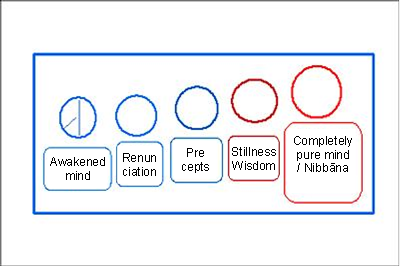
For this reason, the Theravāda school of Buddhism identifies the Perfection of Renunciation (nekkhamma pārami) among the Ten Virtues of Perfection (pārami). In “The Longer Simile of the Heartwood” sutta (Majjhima Nikāya, MN29), the Buddha used the metaphor of a person who seeks the heartwood to teach that the first step on the spiritual path is the renunciation of home life, the second step the practice of Discipline, the third step the practice of Stillness, the fourth step the practice of Wisdom (called the As-Is Knowledge and Vision in the sutta), and the fifth step is the outcome: liberation (which is like the heart of the wood of the perfectly pure life).

Going further back in time, we had the story of Vipassī Buddha, an ancient Buddha who lived in a time when the human life span was tens of thousands of years. The life of Vipassī Buddha presented many similarities with the life of Sakkamuni Buddha. He came into embodiment from the Tusita Heaven into the royal palace of King Bandhuma. He enjoyed all pleasures of life while growing up. After he witnessed an old, ill and dead person, and then met an ascetic monk, he decided to leave the royal palace when his wife just had their first child.

In summary, a truly awakened person needs to “severe desires and forgo greed” in order to reach the final destination of the spiritual path. This is the path that all Buddhas of the past, present and future have and will follow. Following on their footsteps were bhikkhu disciples of the Buddha and then Buddhist Zen masters from India, China, Vietnam etc.

Developmental Buddhism has put forward the figure of Vimalakīrti to demonstrate that lay people can also follow the spiritual path to its completion. This is correct in principle, as any person has the potential for enlightenment as they all have Buddha nature. However, the reality is that in all of Chinese Zen history, there is only the instance of the family of layperson Pang Jushi, consisting of himself, his wife, son and daughter, who conquered death and could stay or leave the world as they wish. In Vietnamese Zen history, there is only the instance of Tuệ Trung Thượng Sĩ who attained enlightenment as a lay person and left the world in awakeness.

Besides these few examples, all those who attained enlightenment had renounced the home life. Let’s not generalize by saying that “all those who renounce the home life will become enlightened” because this statement is not correct. Why is this so?

Renouncing the home life is a necessary condition as it is the first awakening. It is not the only condition, nor a sufficient one.

We might say that a person who renounces the home life has completed half the spiritual path. Why is this so? Once a person becomes ordained, they have the code of precepts to remind, guard and protect them from falling back into the “burning pit” of worldly life. Such a person would fit into the pattern that all Buddhas have taught:

“Not to do wrong, to do good, and to purify one's mind,
That is the teaching of the awakened ones.”

(Dhammapada verse 183, translated by S Beck)


Today, I have introduced you to a path that ancient Buddhas, Sakkamuni Buddha, and Buddhist masters have all followed. This is a straight and direct path that starts with renouncing the home life, and then leading a pure life governed by a code of precepts.

In regards to mental defilements, fetters, underlying traumas, greed, anger and delusion etc, we then gradually attain “disillusionment, dispassion, cessation, peace, insight, awakening, and nibbāna.” (Poṭṭhapāda sutta, Dīgha Nikāya DN9).


Master’s Hall, March 30th, 2021

TN
blank

________________________________________________________________________

Triệt Như - Tâm Tình Với Nhau - 
BÀI 97


LỐI MÒN CỦA NGƯỜI TỈNH THỨC

 “Lối mòn” có nghĩa là một con đường nhỏ, có thể ít người muốn đi, vì nó không nổi tiếng, không được trang trọng trình bày trên kinh sách, hay trong các buối thuyết giảng có hàng ngàn người, hay hàng chục ngàn người tham dự. Nhưng lối đi này có thể đã có vô số người đi qua rồi, vì nó khế hợp kinh điển. ”Người tỉnh thức” chỉ có nghĩa đơn giản là người thực sự muốn tìm cầu một đời sống an lạc bằng trí tuệ và từ bi của chính mình, và sau đó muốn chia sẻ với người khác những kinh nghiệm của chính mình. “Người tỉnh thức” trong bài này không phải chỉ là Đức Phật, bậc Tỉnh thức.

̣̉97-LỐI MÒN CỦA NGƯỜI TỈNH THỨC 1
Vậy bài này viết cho những người tỉnh thức, biết rõ chính mình có tiềm năng giác ngộ, là khả năng tự chuyển hoá để trở nên người hoàn toàn tốt, thiện lành và có trí tuệ. Do đâu mà biết điều đó? Chư Tổ Phát Triển đã nói rõ: “Tâm tánh bản tịnh”. “Tịnh” là trong sạch, cũng có nghĩa là yên lặng. Vậy khi tâm yên lặng thì nó cũng là trong sạchHay nói khác, khi tâm trong sạch thì nó yên lặng. Tại sao?

 Tâm người bình thường hay dính mắc với cảnh, cảnh bên ngoài hay cảnh trong thân. Thấy ánh mặt trời lên buổi sáng sớm, huy hoàng, rực rỡ, thì thưởng thức, chụp hình; buổi chiều trời xanh mây trắng ửng hồng, cỏ cây hoa lá nhuốm màu sắc khác, thì cảm hứng làm thơ; mưa rơi mùa thu thì nghĩ tới quá khứ rồi thương rồi tiếc. Buổi sáng soi gương thấy tóc bắt đầu bạc thì buồn, khi đi đứng không vững, ngã xuốngbiết mình đã yếu. Người khác vồn vã thì vui, người ta lợt lạt thì khổ. Thấy người khác ra đi, thì cũng buồn, biết rồi mình cũng sẽ ra đi, một mình, không có ai bên cạnh.

̣̉97-LỐI MÒN CỦA NGƯỜI TỈNH THỨC 2
Từ những suy tư này, chúng ta biết nếu mình có hiểu biết, không bị cảnh lôi cuốn thì mình mới sống an vui thanh thản được. Tâm yên lặng, không bị xáo trộn vì đời thì tâm mới trong sạch: không thương, không tiếc, không vui, không buồn...Chúng ta tìm về nương tựa nơi Đức Phật. Đây là trí năng đã bắt đầu tỉnh ngộ. Sự tỉnh ngộ này đòi hỏi quyết tâm dấn bước đi, không chần chờ, không do dự, không thoái chuyển, dù gặp chướng duyên. Trên con đường đời hay con đường tu, cũng vậy. Có nhiều khi, con đường tu lại càng có nhiều chông gai thử thách hơn. Cái quyết tâm từ bỏ con đường đời - theo nhận định của Đức Phật, đó là con đường đầy những bụi đời- được thể hiện qua hành động “ly gia cắt ái”. Trong Đại kinh Saccaka (Trung Bộ), Đức Phật kể lại:

Ở đây, này Aggivessana, trước khi Ta giác ngộ, chưa chứng Chánh Đẳng Giác, khi còn là Bồ-tát, Ta suy nghĩ như sau: "Đời sống gia đình bị gò bó, con đường đầy những bụi đời. Đời sống xuất gia như sống giữa hư không. Thật rất khó sống tại gia đình mà có thể sống hoàn toàn đầy đủ, hoàn toàn thanh tịnh đời sống phạm hạnh thuần tịnh. Ta hãy cạo bỏ râu tóc, đắp áo cà-sa, xuất giatừ bỏ gia đìnhsống không gia đình.

Rồi này Aggivessana, sau một thời gian, khi Ta còn trẻ, niên thiếu, tóc đen nhánh, đầy đủ huyết khí của tuổi thanh xuân, trong thời vàng son cuộc đờimặc dầu cha mẹ không bằng lòng, nước mắt đầy mặt, than khóc, Ta cạo bỏ râu tóc, đắp áo cà-sa, xuất giatừ bỏ gia đìnhsống không gia đình.

 Trong thời Đức Phật, những vị được gặp Phật, được nghe Phật giảng pháp, thường đều phát tâm xuất gia ngay. Đây có thể là những người đã trồng nhiều căn lành trong quá khứ, đời này mới gặp Phật, và chỉ sau một thời gian ngắn vào rừng ẩn tu, họ đạt được Phạm hạnh, được gọi là bậc A la hánan trú trong trạng thái Niết bàn ngay khi còn sống. Ngoài ra cũng có những người tỉnh ngộphát tâm quy ngưỡng Phật- Pháp- Tăng trọn đời. Những người này cũng gìn giữ giới luật của cư sĩbố thí, làm việc lành, nhưng thường chỉ tái sanh vào cõi trời, hưởng phước báu. Vì còn sống trong gia đình, nên khó đạt được hạnh sống hoàn toàn trong sạch.

Phật nhiều lần nhấn mạnh rằng “ÁI” là gốc của biển khổ, không những trong đời này, mà cũng là gốc của tái sanhtriền miên trôi lăn hoài, không biết tới bao giờ mới dừng.

Ngay sau khi thành đạoĐức Phật đã nói bài thi kệ này:

“Đã nhiều kiếp ta đi lang thang trong vòng luân hồi sanh tử,

Ta đi tìm người thợ làm cái nhà này.

Ta đi tìm mãi mà không gặp.

Lặp đi lặp lại đời sống thật là buồn chán.

Này hỡi người thợ làm nhà,

 Nay ta đã tìm được ngươi.

Từ đây ngươi không còn cất nhà cho ta nữa.

Cây đòn dông mà ngươi dựng nên đã bị gãy nát.

Ta đã chứng quả vô sanh bất diệt,

 Ta đã đoạn tận mọi ái dục.”

Trong bài kinh “Cội rễ sự vật”, Phật nói “Cội rễ sự vật là Dục”. Dục hay Ái hay Tham, ý nghĩa và tác dụng tương tự nhau.

Vì thế, hệ Theravāda chủ trương Thập Độ Ba la mật, có Xuất gia Ba la mật. Trong bài kinh Thí dụ Lõi Cây, Phật cũng dạy như một người muốn tìm cầu lõi cây, bước thứ nhất là xuất gia, bước thứ hai là tu Giới, bước thứ ba tu Định, bước thứ tư tu Huệ (Như Thực tri kiến), bước thứ năm là kết quả: giải thoát (như là lõi cây của Phạm hạnh).

Kể về thời quá khứ xa xưa, trong những thời gian của những vị cổ Phật, như Đức Phật VIPASSI (Tỳ Bà Thi), đời sống con người dài hàng vạn năm. Cuộc đời của Đức Phật Vipassī có nhiều nét đại cương tương tự cuộc đời của đức Phật Thích caBồ tát cũng giáng sinh từ cung trời Đâu suất vào hoàng cung vua Bandhuma. Tuổi trưởng thành ngài cũng hưởng đầy đủ dục lạc. Sau khi trông thấy cảnh một người già, một người bệnh rồi một người chết, và cuối cùng gặp một vị tu sĩ, ngài đã bỏ hoàng cung ra đi, ngay khi công chúa sinh đứa con trai đầu lòng...

Kết lại, một người thực sự tỉnh thức, phải cắt ái, phải ly tham. Thì mới mong có ngày đi hết con đường. Và đây là con đường mòn, nghĩa là chư Phật đời quá khứ, chư Phật đời hiện tại, chư Phật đời vị lai đều đã đi, và sẽ đi. Tiếp theo là chư vị Tỳ kheo đệ tử Chư Phật, và tiếp theo nữa là chư vị Tổ Thiền Ấn Độ, Trung Hoa, Việt nam v..v...

Tuy nhiên, hệ Phát Triển đưa ra hình ảnh ngài Duy Ma Cật để chứng minh rằng người cư sĩ cũng vẫn có thể tu tới nơi rốt ráo. Trên mặt nguyên tắc thì đúng, vì ai cũng có khả năng giác ngộ, tức Phật tánh là bình đẳng. Nhưng trên thực tế, trong thiền sử Trung Hoa, chỉ có một trường hợp, là gia đình ông cư sĩ Bàng Long Uẩn, vợ và con trai con gái, cả bốn người đều làm chủ sinh tử, muốn ở thì ở, muốn ra đi thì ra đi tự tại. Trong thiền sử Việt nam, chỉ có Tuệ Trung thượng sỹ là cư sĩ sáng đạo và ra đi trong tỉnh thức.

Ngoài ra dường như tất cả người sáng đạo đều là xuất giaChúng ta đừng nên lý luận ngược lại: “tất cả người xuất gia đều sáng đạo”, câu này không đúng. Vì sao?

Xuất gia là một điều kiện cần, là bước tỉnh thức đầu tiên. Chưa phải là điều kiện duy nhất, chưa phải là điều kiện đủ.

Xuất gia xem như đi được nửa con đường, vì sao? Xuất gia rồi, có giới luật để gìn giữ mình, nhắc nhở mình, bảo vệ mình không rơi trở lại vào “cái hầm lửa hừng” của đời. Xem như tham, sân, si bớt lần. Xem như lậu hoặc được mỏng đi. Xem như đi vào đúng cái khớp của những lời chư Phật dạy:

“ Chư ác mạc tác

Chúng thiện phụng hành

Tự tịnh kỳ ý

Thị chư Phật giáo”.

Hôm nay, chúng ta được giới thiệu một lối mòn mà Đức Phật Thích Ca đã đi, chư vị Cổ Phật đã đi, chư Tổ đã đi qua, một con đường thẳng tắp, bắt đầu xuất gia, là hạnh sống có GIỚI ĐỨC.

Đối với lậu hoặckiết sửtùy miên, tham, sân, si ... chúng ta từ lần “ yểm ly- ly tham- đoạn diệt không có dư tàn- giải thoát- niết bàn”.

Tổ đình, 30- 3- 2021
TN


̣̉97-LỐI MÒN CỦA NGƯỜI TỈNH THỨC


Send comment
Off
Telex
VNI
Your Name
Your email address
Tuesday, January 13, 20266:11 PM(View: 24)
Today, recalling stories from the old days which were only some years ago; yet it feels like endlessly distant. Joyful days passed so quickly! Twenty years gone! There wasn’t even the chance to celebrate the twenty-fifth anniversary before everyone had drifted away. Fall is coming, then spring, then autumn again. And now, only two yellow leaves remain, lonely and thinly clinging to the branch.
Wednesday, January 7, 20269:42 AM(View: 288)
Aber wann denke ich denn nicht an unseren Meister? Ein gelbes Blatt fällt runter. Auf dem letzten Gemälde ist lediglich eine purpurrote Salablüte zu sehen, die herabfällt. Oder ein einzelnes, gelbes, trockenes Blatt, das von einem Zweig gefallen ist und im Garten verstreut liegt.
Tuesday, January 6, 202612:19 PM(View: 240)
In conclusion, a sudden breakthrough or realization must occur at least once, or even multiple times, along the path of practice for one to truly enter the Chan house. Only then can one walk forward freely, no longer encountering obstacles within the mind. If one has not yet realized the original mind, one is still standing outside the gate... Once the latter is clearly realized, the former naturally fades away.
Sunday, December 28, 20259:56 PM(View: 334)
Sáu năm trôi qua, từ ngày vắng bóng Thầy, chúng đệ tử vẫn tiếp tục hành trì pháp Thầy truyền trao. Các thiền sinh vẫn siêng năng họp chúng tu tập hằng tuần trên online, mỗi hai tháng các vị ấy đều về Thiền Viện nhập thất, cùng nhau ôn tập và chia sẻ kinh nghiệm tu tập.
Thursday, December 25, 20254:05 PM(View: 699)
Mùa tưởng niệm Thầy, lúc nào lại không là mùa tưởng niệm Thầy? Một chiếc lá vàng rơi. Bức tranh cuối cùng này chỉ có một đóa hoa sala đỏ thắm rơi hay một chiếc lá vàng khô, lìa cành, rơi rụng trong vườn.
Tuesday, December 23, 20252:44 PM(View: 380)
Gọi là hương vị, vì người viết đã nếm được vị vô thường, nhận ra được tánh sinh diệt là điều tự nhiên, là sự vận hành của pháp... nên mỗi khi nhớ đến Thầy thì trong lòng không còn đau buồn hay sợ hãi trước những thay đổi bất ngờ xảy ra trong cuộc sống. Bạch Thầy, học trò kính dâng lên Thầy lòng thương kính và tri ân vô bờ.
Tuesday, December 16, 20258:47 AM(View: 475)
Tháng 12, TƯỞNG NIỆM ÂN SƯ cùng nhau nghe lại tiếng nói của Thầy Thực hiện VIDEO: NHƯ ANH Đạo tràng Toronto
Thursday, December 11, 20253:03 PM(View: 463)
Schools and lineages, Zen masters, various means of Dharma teachings are all conditioned phenomena. They arise and cease. The Utmost Truth, however, is unconditioned, eternal, and does not come and go.
Thursday, December 11, 202510:09 AM(View: 535)
Tháng 12, TƯỞNG NIỆM ÂN SƯ cùng nhau đọc lại bài viết về Thầy của Ni sư
Wednesday, December 3, 20253:01 PM(View: 486)
Muốn đạt được “Trí tuệ vô lậu”, hành giả phải tu học, hành trì ba môn Vô lậu Giới-Định-Tuệ, là pháp môn mà Đức Phật đã đi qua và thực chứng trí tuệ ba minh (Túc mạng minh, Thiên nhãn minh, Lậu tận minh) dưới cội Bồ đề.
Wednesday, November 26, 20253:38 PM(View: 531)
Chinese Chan Buddhism is regarded as having begun with its First Patriarch, Bodhidharma, an Indian monk, via the “lion’s roar” awakened people to return to their original mind and recognize their inherent nature—empty, quiescent, and luminous.
Wednesday, November 19, 20257:46 PM(View: 856)
TÀI LIỆU HỌC TẬP: Khóa THIỀN CĂN BẢN 2025_KỲ 5 ngày 28 tháng 6, 2025 do Ni Sư Triệt Như trực tiếp hướng dẫn. Bao gồm các AUDIO & SLIDES từ Bài 17 đến Bài 20 có tại LINK: https://www.tanhkhong.org/p105a4826/ky-5
Saturday, November 15, 20257:59 AM(View: 543)
Kinh Trường Bộ Tập 1 8. Kinh Ca-diếp Sư tử hống (Kassapa-Sìhanàda sutta) còn có tên là Kinh "Đại sư tử hống" (Mahàsìhanàda Sutta)
Tuesday, November 11, 20258:39 PM(View: 617)
So hat Buddha gelehrt: „Seid euch selbst ein Licht, dem ihr folgen könnt. Nehmt zur Wahrheit Zuflucht . Verlasst euch auf niemanden und nichts anderes!. Denn alles ist vergänglich“.
Tuesday, November 11, 20258:27 PM(View: 691)
All the sects and sub-lineages in these two great transmission traditions have preserved the essential teachings of the Buddha and share the same ultimate goal: liberation from suffering, enlightenment, and self-emancipation.
Monday, November 10, 20258:10 PM(View: 872)
TÀI LIỆU HỌC TẬP: Khóa THIỀN CĂN BẢN 2025_KỲ 5 ngày 28 tháng 6, 2025 do Ni Sư Triệt Như trực tiếp hướng dẫn. Bao gồm các AUDIO & SLIDES từ Bài 17 đến Bài 20 có tại LINK: https://www.tanhkhong.org/p105a4826/ky-5
Wednesday, November 5, 20252:07 PM(View: 675)
Ba cánh cửa giải thoát “ Không, Vô tướng, Vô tác ” là trí tuệ siêu vượt của Đức Thế Tôn trao truyền cho người hữu duyên. Đây là sự quán chiếu sâu sắc vê “ duyên khởi, tánh Không, vô thường, vô ngã và Niết-bàn ”.
Tuesday, November 4, 20259:29 AM(View: 590)
Kinh Tăng Chi Bộ Chương 8 Tám Pháp VIII. Phẩm Song Đôi (73) Niệm Chết (1) (52) Niệm Chết (2)
Tuesday, November 4, 20251:31 AM(View: 986)
TÀI LIỆU HỌC TẬP: Khóa THIỀN CĂN BẢN 2025_KỲ 5 ngày 28 tháng 6, 2025 do Ni Sư Triệt Như trực tiếp hướng dẫn. Bao gồm các AUDIO & SLIDES từ Bài 17 đến Bài 20 có tại LINK: https://www.tanhkhong.org/p105a4826/ky-5
Wednesday, October 29, 202512:54 PM(View: 1024)
TÀI LIỆU HỌC TẬP: Khóa THIỀN CĂN BẢN 2025_KỲ 5 ngày 28 tháng 6, 2025 do Ni Sư Triệt Như trực tiếp hướng dẫn. Bao gồm các AUDIO & SLIDES từ Bài 17 đến Bài 20 có tại LINK: https://www.tanhkhong.org/p105a4826/ky-5
Monday, October 27, 20253:44 PM(View: 662)
Kinh Trường Bộ Tập 1 8. Kinh Ca-diếp Sư tử hống (Kassapa-Sìhanàda sutta) còn có tên là Kinh "Đại sư tử hống" (Mahàsìhanàda Sutta)
Wednesday, October 22, 20259:28 AM(View: 698)
The Buddha taught the last wholehearted words before leaving this world: “Be a lamp unto yourself.” “Rely only upon the Dharma.” “Do not depend upon anyone or anything else.” “ Because ‘Everything in this world is impermanent’. ”
Tuesday, October 21, 202511:29 PM(View: 899)
Ni Sư Triệt Như Khóa THIỀN CĂN BẢN 2025 Bài 16: TÁNH THẤY - Ngày 21 tháng 6, 2025 tại Thiền Đường Tánh Không Nam Cali. Bài viết bao gồm VIDEO và các SLIDES.
Monday, October 20, 20258:54 PM(View: 738)
Wir nennen sie die Motten „selbstverbrennende Insekten“, weil sie direkt ins Licht fliegen und tot zu Boden fallen, sobald sie die heiße Glühbirne berühren. Ich frage mich, welcher Instinkt sie dazu treibt und warum sie vom Licht angezogen werden. Warum fliegen sie immer wieder in die Glühbirne, obwohl sie sehen, wie andere Motten dabei ums Leben sterben?
Monday, October 20, 20254:06 PM(View: 1039)
Chapter 14, titled "Detachment from Forms to attain Tranquility," stands as one of the most vital and profound chapters within the Diamond Sutra. Its full name conveys that by letting go of all phenomenal forms and delusive thoughts, one can attain the state of ultimate stillness and cessation (Nirvana).
Wednesday, October 15, 20252:16 PM(View: 1307)
Ni Sư Triệt Như Khóa THIỀN CĂN BẢN 2025 Bài 15: TÁNH NGHE Ngày 21 tháng 6, 2025 tại Thiền Đường Tánh Không Nam Cali.
Tuesday, October 14, 20256:47 PM(View: 896)
Wherever coming, why did Venerable Bhaddiya keep saying, “Oh, peaceful indeed”? The other monks looked around, seeing only a quiet forest, a tree bottom, or an empty hut, and could not understand. They assumed Bhaddiya was recalling his luxurious royal life. This shows the worldly habit of common people projecting on their own subjective thinking.
Monday, October 13, 20257:52 PM(View: 1173)
Both "The Mu Koan" (in Japanese Zen Buddhism, especially the Rinzai school) and the "No-Talk" Technique (belonging to the Sunyata Meditation of Venerable Thich Thong Triet, a modern Vietnamese tradition rooted in Abhidharma and Nikāya) aim for a common goal: the direct realization of the Awareness Nature beyond words and concepts. However, their methods and psycho-cognitive contexts fundamentally differ.
Monday, October 13, 202511:12 AM(View: 5008)
Kinh Tăng Chi Bộ Chương 8: Tám Pháp VI. Phẩm Gotamì (51) Mahàpajàpatì Gotamì (52) Ai Giáo Giới?
Saturday, October 11, 20255:15 PM(View: 678)
Quán pháp trên các pháp trong kinh Tứ Niệm Xứ được hiểu là nhìn sự vật bằng cái nhìn khách quan, nhìn cái đang là của đối tượng ngay trong hiện tại, dù đối tượng thiện hay bất thiện trong tâm không phản ứng đồng ý hay bài xích.
Friday, October 10, 20254:10 PM(View: 651)
Kinh Phật Tự Thuyết Chương 1 Phẩm Bồ Đề (Udàna)
Wednesday, October 8, 202512:20 PM(View: 1145)
Ni Sư Triệt Như Khóa THIỀN CĂN BẢN 2025 Bài 14: TƯ THẾ TỌA THIỀN Ngày 21 tháng 6, 2025 tại Thiền Đường Tánh Không Nam Cali.
Wednesday, October 8, 202511:31 AM(View: 1244)
Dans la pratique du Méditation, la méthode de relaxation de l’esprit ou de relaxation des pensées constitue une partie essentielle dans la création d’une réponse biologique immédiate permettant de guérir les maladies psychosomatiques et la neurasthénie. Elle est l’antidote à la dépression (stress), aux troubles émotionnels et elle rétablit les dysfonctionnements du système nerveux.
Wednesday, October 8, 202511:25 AM(View: 721)
A person’s life is also like a constantly flowing stream, never stopping. Everything, health, youth, happiness, loved ones, all flows forward in a one-way direction: birth-aging-sickness-death, or in another way: arising-existing-decaying-disappearing. This one-way path means that once something has passed, it never returns exactly as it was.
Monday, October 6, 20253:14 PM(View: 811)
Kinh Trường Bộ Tập 1 Phần 2 2. Kinh Sa-Môn Quả (Sàmannaphala sutta) (The Fruits of the Contemplative Life)
Wednesday, October 1, 202510:41 AM(View: 963)
Au final, le chemin du perfectionnement réside uniquement dans un ksana. Un ksana de pleine conscience. Un ksana pour savoir comment vivre. C’est celui de l’étant. Rester dans le ksana de l’étant en permanence. C’est demeurer paisiblement dans le Nirvana.
Wednesday, October 1, 20259:34 AM(View: 1245)
Because of inner speech, the Mind never truly rests, even during sleep. Inner speech is the very fuel of liking (craving), disliking (aversion), and of various addictive passions, traditions, and attachments to family, society, and so on. It is the root of Suffering (delusion), for it is precisely what gives rise to psychosomatic illnesses, causes conflicts with others, and creates imbalance with the living environment.
Wednesday, October 1, 20259:30 AM(View: 1212)
Dans le parcours de pratique et de réalisation, le Bouddha n’a pas enseigné à chercher une divinité suprême ou une entité éternelle à l’extérieur, mais Il a directement montré à l’intérieur de ce corps-esprit, afin que le pratiquant puisse reconnaître la nature véritable de lui-même. L’un des enseignements essentiels qui aide le pratiquant à revenir à sa nature pure est la reconnaissance des quatre facultés : Voir, Entendre, Toucher et Percevoir.
Wednesday, October 1, 20259:26 AM(View: 917)
For a long time now, the pepper tree has reminded me of the art of living, " adapting to situations yet staying unagitated." Its trunk is sturdy and solid, standing tall against the vast sky. Despite wind and rain, the trunk does not shake. This tree surely has a hard inner core. In the Buddhist discourse “The Simile of the Heartwood”, the Buddha compared the ultimate goal of virtuous life to mind liberation, which is similar to the heartwood of a tree, its most valuable part. The heartwood lies hidden deep inside the trunk, hard to see and find. Mind liberation is also abstract, difficult to seek and attain.
Monday, September 29, 20257:04 PM(View: 1618)
Ni Sư Triệt Như Khóa THIỀN CĂN BẢN 2025 Bài 13: NHỮNG TƯ THẾ THỰC TẬP THIỀN - Ngày 21 tháng 6, 2025 tại Thiền Đường Tánh Không Nam Cali. Bài viết bao gồm VIDEO và các SLIDES có tại LINK: https://www.tanhkhong.org/p105a4815/tai-lieu-hoc-tap-cac-slides-khoa-thien-can-ban-2025-ky-4-ngay-21-thang-6-2025.
Sunday, September 28, 202512:24 PM(View: 840)
Trung Bộ Kinh Tập 1 Phần 39 1. Đại kinh Xóm ngựa (Mahà-Assapura sutta)
Wednesday, September 24, 202510:07 PM(View: 960)
Trung Bộ Kinh Tập 1 Phần 1 1. Kinh Pháp Môn Căn Bản (Mùlapariyàya sutta) (The Root Sequence)
Wednesday, September 24, 202510:38 AM(View: 1135)
This presentation compares the 'No-Talk' technique, from the Sunyata Meditation lineage taught by Venerable Thich Thong Triet, with Chapter 9: The Dharma-Gate of Non-Duality in the Vimalakirti Sutra, to clarify the similarities in their practice content and the state of mind that both methods aim to achieve.
Wednesday, September 24, 202510:31 AM(View: 983)
Since the time we’ve been in this world, through countless lives, it remains faithful, side-by-side to us to remind of good and wholesome things. Many times, we might betray it or neglect it. But it keeps loyal to us. Who’s it? It’s the Knowing, the Mind. Thus, my friends, remember to live every moment fully with this silent, true-blue and crystal-clear ride-or-die companion.
Saturday, September 20, 20253:49 PM(View: 918)
Tam giới gồm ba cõi : Cõi Dục, cõi Sắc, cõi Vô Sắc là toàn bộ vũ trụ quan theo cái nhìn của Phật giáo. Tùy mức độ nghiệp lực và khả năng tu tập, mà chúng sanh sẽ tái sinh, sống ở một trong ba cõi này.
Thursday, September 18, 202510:37 AM(View: 890)
There are two different types of spiritual backgrounds for renunciation. 1- For lay people. They get ordained due to: Decline of Old Age, Decline of Illness, Decline of Possessions, Decline of Beloveds and Blooded Relations 2- For those who are sagacious. They get ordained due to: The world is impermanent and subject to destruction, The world is aidless and unprotected, The world is non-ownership. When leaving it, one must drop down everything behind, The world is needy, insatiable, and enslaved by cravings...
Sunday, September 14, 20254:35 PM(View: 1351)
Ni Sư Triệt Như Khóa THIỀN CĂN BẢN 2025 Bài 12: THIỀN QUÁN ANUPASSANÀ - Ngày 14 tháng 6, 2025 tại Thiền Đường Tánh Không Nam Cali. Bài viết bao gồm VIDEO và các SLIDES.
Sunday, September 14, 20254:35 PM(View: 1415)
Ni Sư Triệt Như Khóa THIỀN CĂN BẢN 2025 Bài 11: NÃO BỘ - Ngày 14 tháng 6, 2025 tại Thiền Đường Tánh Không Nam Cali. Bài viết bao gồm VIDEO và các SLIDES.
Tuesday, September 9, 20254:59 PM(View: 906)
“I abandon my own mind and live in the best alignment with those venerables’ one.” And Utmost Lord, we are of different bodies, but our mind is unified.”
Friday, September 5, 202512:35 PM(View: 1491)
Các ông đều trình bày đúng theo kinh nghiệm của mỗi vị. Còn đây là câu trả lời của ta: “Tỷ-kheo sau khi đi khất thực và thọ trai về, ngồi kiết-già, lưng thẳng, đặt niệm trước mặt, và nghĩ rằng: "Ta sẽ không bỏ ngồi kiết-già này cho đến khi tâm của ta được khéo giải thoát khỏi các lậu hoặc, không có chấp thủ.'' Này Sāriputta, hạng Tỷ-kheo như vậy có thể làm sáng chói khu rừng Gosinga.
Wednesday, September 3, 20251:00 PM(View: 1077)
Tóm lại, theo lời Đức Phật, con cái phải luôn tâm niệm báo đền công ơn cha mẹ. Sự hiếu thảo của con cái đối với cha mẹ không chỉ dừng lại ở sự phụng dưỡng về vật chất, mà còn phải khuyến hóa cha mẹ hướng đến đời sống thiện lành, phát khởi tín tâm với Phật pháp, thực hành giữ giới, bố thí...
Wednesday, September 3, 202511:57 AM(View: 1429)
Ni Sư Triệt Như Khóa THIỀN CĂN BẢN 2025 Bài 9: Bài Kinh NHẤT DẠ HIỀN GIẢ - Ngày 14 tháng 6, 2025 tại Thiền Đường Tánh Không Nam Cali. Bài viết bao gồm VIDEO và các SLIDES.
Wednesday, September 3, 202511:30 AM(View: 1057)
At first glance, the title might sound kinda broad, sublime and even so fancy. Yeah, it is! How could we fully refer to such a thoughtful topic just in a few pages? Even it might take one book to write about a way of life. So, I’m gonna stay in the Buddhist viewpoint to talk about the Boddhisatva’s lifestyle under the term “Four Dharma for Mind Subduing”.
Tuesday, September 2, 20258:18 PM(View: 1443)
Sau khi nhận ra rõ ràng sự hiện hữu của thiên nhiên và con người trên thế gian, do nhân và duyên mà có mặt, lại do nhân và duyên mà thay đổi và biến mất rồi lại tái sinh, dòng sống của con người và thiên nhiên cứ tuôn chảy mãi như thế không ngừng, người ẩn sĩ cô độc trong khu rừng già bên bờ sông Nerañjarā (có khi viết là Niranjana) giờ đây đã thấy rõ tất cả những diễn tiến trong đời, đã tháo gở ra tất cả các sự rối ren phiền muộn từng ấp ủ ray rứt trong tâm.
Tuesday, September 2, 20253:32 PM(View: 962)
Le terme Dhamma, depuis l’Antiquité jusqu’à aujourd’hui, possède de très nombreuses significations et un sens très vaste. C’est pourquoi je vais provisoirement les regrouper afin de les répartir en trois contenus différents, c’est-à-dire qu’on peut les classer en trois sens distincts du mot Dhamma.
Saturday, August 30, 20257:46 PM(View: 1344)
Saturday, August 30, 202511:36 AM(View: 1234)
Cette année, l’Association Sunyata Suisse (ASS) a organisé la retraite à Tulette et non plus au Camp de Vaumarcus. Tulette est un petit village situé au sud de la France. Mme Huệ Thuận, responsable de l’ASS possède un vignoble et une oliveraie à Tulette. Le terrain est vaste avec beaucoup d’espaces libres couverts d’herbe. Le bâtiment principal compte un étage et en tout neuf chambres à coucher.
Thursday, August 28, 20257:10 PM(View: 1300)
Ni Sư Triệt Như Khóa THIỀN CĂN BẢN 2025 Bài 8: HAI SẮC THÁI TÂM - Ngày 7 tháng 6, 2025 tại Thiền Đường Tánh Không Nam Cali. Bài viết bao gồm VIDEO và các SLIDES.
Thursday, August 28, 20256:57 PM(View: 1019)
Thất giác chi không chỉ là bảy yếu tố quan trọng hỗ trợ hành giả trong vấn đề tu tập thiền hướng đến giác ngộ giải thoát, mà Thất giác chi còn có giá trị thực tiễn trong đời sống hằng ngày của người cư sĩ chúng ta.
Wednesday, August 27, 202512:49 PM(View: 1145)
The joking words of the Master’s long-term students are the conclusion for this piece. In daily life, “No bargaining.” Why? When someone quotes a price, it’s what they’re expecting. When we say yes to it, they’ll be so happy, right? We, mind practitioners, should bring joy to everyone. So, yeah! “No bargaining.” Dear friends, a Master can thoroughly understand his disciples. But the disciples could hardly grasp their Master’s full depth of compassion.
Wednesday, August 27, 202510:38 AM(View: 1483)
Ngày qua ngày, trăng từ từ khuyết rồi biến mất trong màn đêm, rồi trăng lại từ từ lên, lại tròn hơn. Dòng tâm của ngài tuôn chảy trong hơn, trong hơn, hỷ lạc từ từ nhẹ nhàng, chỉ là an lạc, rồi thanh thản, trầm lặng, không còn thân, không còn tâm. Tại sao ta có mặt ở đây? Vì đời trước ta đã có mặt, đã sống như thế. Tại sao đời trước ta như thế? Vì đời trước nữa ta đã như thế v.v…
Thursday, August 21, 202512:25 PM(View: 1086)
How come some guys have said the forest of Dharma is filled with colorful flowers from various plants, abundant treasures and the Dharma preaching sounds from all the Buddhas echoing everywhere? But how come the others keep moving place from place and wondering “Where are the treasures? Where is the Buddha? What path is for me? Why is it so obscure?” So many paths diverged from life. So do many paths for mind practice. How come?
Friday, August 15, 20259:30 AM(View: 1426)
Ni Sư Triệt Như Khóa THIỀN CĂN BẢN 2025 Bài 7: LẬU HOẶC Ngày 7 tháng 6, 2025 tại Thiền Đường Tánh Không Nam Cali Bài viết bao gồm VIDEO và các SLIDES.
Wednesday, August 13, 202511:40 AM(View: 1193)
Instead of demanding more from life, do ask yourself “What have I contributed to life so far?” With the mind of understanding and true sagacity, we then realize we’ve owed deep and unfathomable gratitude to this world.
Monday, August 11, 202512:45 PM(View: 1803)
Ni sư Triệt Như Khóa THIỀN CĂN BẢN 2025 - Bài 6 ngày 7 tháng 6, 2025 tại Thiền Đường Tánh Không Nam Cali Bài viết bao gồm VIDEO và các SLIDES.
Sunday, August 10, 202510:38 AM(View: 1583)
Sáng nay, thái tử ngồi một mình dưới bóng mát tàn cây jambu, thả tầm mắt nhìn xuống khoảng không gian tươi mát, cây lá xanh xanh, hoa nở, âm thanh tiếng trống bập bùng, tiếng kèn trầm bổng vang lên từ cánh đồng, bao nhiêu màu sắc xanh đỏ trắng vàng qua qua lại lại.
Thursday, August 7, 202512:08 PM(View: 1736)
Ni sư Triệt Như Khóa THIỀN CĂN BẢN 2025 - Bài 5: KHÁI QUÁT VỀ TÂM ngày 7 tháng 6, 2025 tại Thiền Đường Tánh Không Nam Cali Bài viết bao gồm VIDEO và các SLIDES.
Wednesday, August 6, 20258:49 AM(View: 1238)
Reading the title of this article, you may be surprised and wonder: “Liberation is emancipation—how can it be enclosed in a frame? Isn’t it contradictory?”
69,256
